



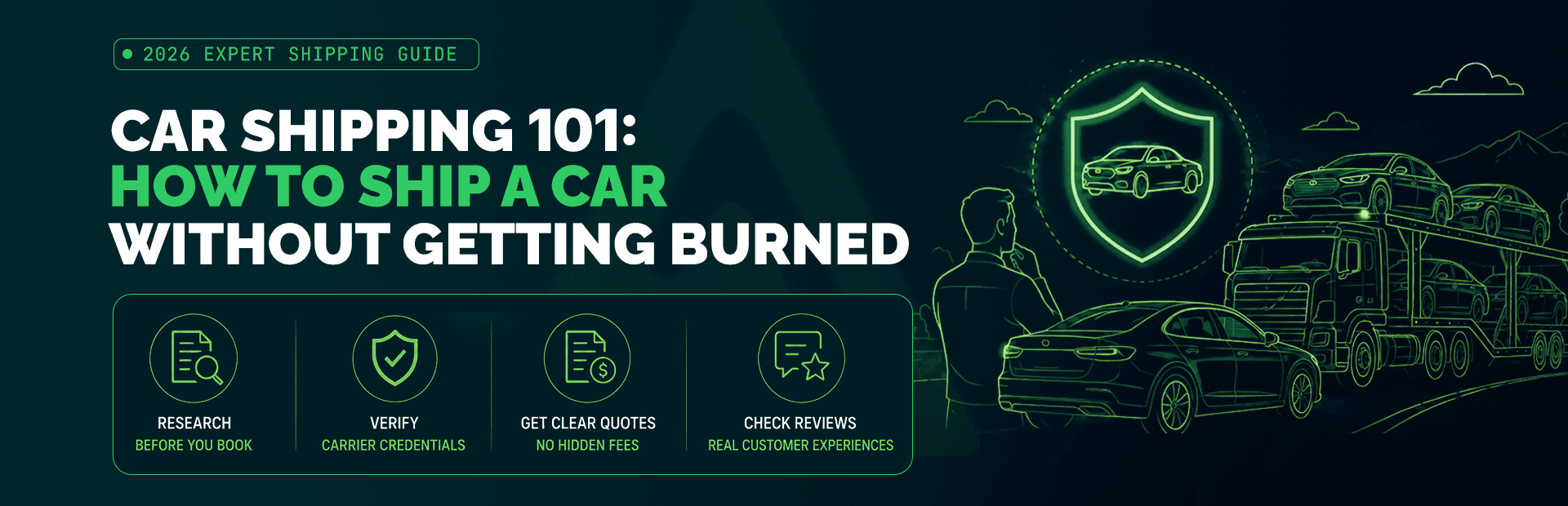
Most people picture car shipping as a cross-country haul, but the data says otherwise. In 2025, nearly 80% of shipped vehicles traveled under 1,000 miles, according to Super Dispatch's analysis of 10 million transactions.
So this is not a niche service for collectors. It is a normal way regular people move a normal car. If you have never done it, the process can still feel like a gamble: ten companies calling with ten different prices and no clear way to tell who is real.
This guide fixes that. By the end, you will know how car shipping works, what it costs in 2026, how to vet a company, and what to do on pickup and delivery day.
Get real numbers before you read further. Get free, no-obligation car shipping quotes for your exact route and see what your move actually costs.
What Car Shipping Actually Is: Broker vs Carrier

Car shipping means paying a company to move your vehicle on a truck instead of driving it yourself. Simple enough. The part that trips up first-timers is who they are actually talking to. The auto transport world has two kinds of players, and knowing the difference protects your wallet and your patience.
A carrier owns the truck and physically hauls your car. A broker does not own trucks. Instead, a broker posts your job to a national load board, finds an available carrier, and manages the booking. Both are federally regulated. Any legitimate broker or carrier must be licensed and bonded through the U.S. Department of Transportation, a requirement you can read straight from the Federal Motor Carrier Safety Administration. That licensing is the baseline. No number, no deal.
Here is the honest picture of how the two compare.
|
Who They Are |
What They Do |
You Deal With Them When |
The Catch |
|
Broker |
Arranges the move, finds a truck |
Booking, quoting, customer service |
You need to confirm which party carries the cargo insurance |
|
Carrier |
Owns and drives the truck |
Pickup, transit, delivery |
A single carrier covers fewer routes, so timing can be less flexible |
|
Hybrid (broker with its own fleet) |
Both arranges and hauls |
Start to finish |
Availability still depends on their trucks being on your route |
Most of the car transport companies you find online are brokers, not truck owners. That is not a red flag by itself. Brokers exist because they find you a truck faster than you could on your own, especially on less common routes. The key is knowing who answers the phone at pickup and whose insurance covers your car in transit. If a company cannot answer those two questions clearly, keep looking. For a deeper look at how the money flows between the two, this breakdown on how broker and carrier pricing differs is worth a read, and the full car transport guide covers the mechanics end to end.
Open vs Enclosed: The Choice That Sets Your Price and Your Risk
Nearly every car shipping booking comes down to one fork in the road, open or enclosed transport. The right answer depends on the car, not on which one sounds more premium. Get this decision right and you either save several hundred dollars or buy real peace of mind, depending on what you are moving.
|
Method |
Best For |
Cost Difference |
Protection Level |
|
Open carrier |
Standard daily drivers, SUVs, sedans |
Baseline (cheapest) |
Exposed to weather and road debris |
|
Enclosed carrier |
Classics, exotics, luxury, low-clearance cars |
About 47% more |
Fully covered, shielded from the elements |
Independent cost data backs up how wide that gap runs. Move.org reports an average open shipment at roughly $914 versus about $1,342 for enclosed, a difference of around $428, or 47% more for the covered option.
Open Car Shipping: The Default for Most People
Open transport is how the vast majority of cars move. These are the same multi-level trucks you see hauling new cars to dealerships. Your vehicle rides exposed to the weather, which sounds worse than it is. A few days of highway wind and the occasional dust is the same thing your car faces sitting in a driveway. For a normal daily driver, relocating owner, or student heading to campus, open transport is cheaper, books faster, and gets the job done safely. Unless you are moving something rare or high-value, this is your lane. You can see exactly what it covers on the open car shipping service page.
Enclosed Vehicle Shipping: When the Extra Cost Is Worth It
Enclosed transport puts your car inside a covered trailer, sealed off from weather, road debris, and prying eyes. It costs more and books slower because there are fewer enclosed trucks on the road. For a classic, an exotic, a low-clearance sports car, or anything with real collector value, that premium is the honest call. You are not paying for luxury. You are paying to keep a six-figure paint job off the open highway. If that describes your car, start with the enclosed vehicle shipping details, and this comparison on whether enclosed is worth paying more lays out the math cleanly, alongside the wider open vs enclosed cost guide.
What Car Shipping Costs in 2026 and What Moves the Number
Here is the answer people came for. A car shipping quote is built from distance, vehicle size, route popularity, transport type, and timing. Anyone who quotes you a flat number without asking about your car and your route is guessing.
The national picture looks like this. ConsumerAffairs data puts the cost range between 53 cents and $2.30 per mile, with short-distance moves averaging around $500 and cross-country delivery near $1,700. The per-mile rate drops sharply the farther you go, which is why a 300-mile hop can feel expensive per mile while a 2,000-mile haul feels like a bargain by comparison.
The Six Factors That Actually Set Your Price
Auto shipping prices move on a handful of levers. Three of them you can control.
-
Distance and route: Popular lanes between major cities cost less per mile because trucks run them constantly.
-
Vehicle size and weight: Bigger is pricier. Pickup trucks run about 38% more than a standard sedan to move.
-
Running vs non-running: An inoperable car that will not roll adds roughly $100 to $300 for winch loading.
-
Open vs enclosed: The 47% premium from the last section lives here.
-
Time of year: Snowbird season and summer moves push prices up when trucks are in demand.
-
Pickup location: A rural address off the main highway costs more than a city terminal a driver can reach easily.
The last three are where a flexible shipper saves real money. Loosen your pickup date, meet the truck at a main road, and avoid peak weeks, and the same shipping car job gets cheaper. For the full picture, this complete cost breakdown and this guide to the five factors that shape your quote go deeper than most.
Door-to-Door vs Terminal-to-Terminal
You also choose how the car changes hands. The two options are not priced the same.
|
Option |
How It Works |
Cost |
Best For |
|
Door-to-door |
Truck comes as close to your address as the streets allow |
Slightly higher |
Most people, convenience |
|
Terminal-to-terminal |
You drop off and pick up at a lot |
Cheaper |
Budget shippers near a terminal |
Door-to-door is what most people choose because it is simple, the driver brings the car to you. Terminal-to-terminal shaves the price if you live near a hub and do not mind the extra trip. If speed matters more than savings, some carriers offer expedited priority auto shipping that locks a tighter pickup window for a premium. That is the trade in auto shipping services, you pay for either convenience or a discount, rarely both.
How to Ship a Car, Step by Step
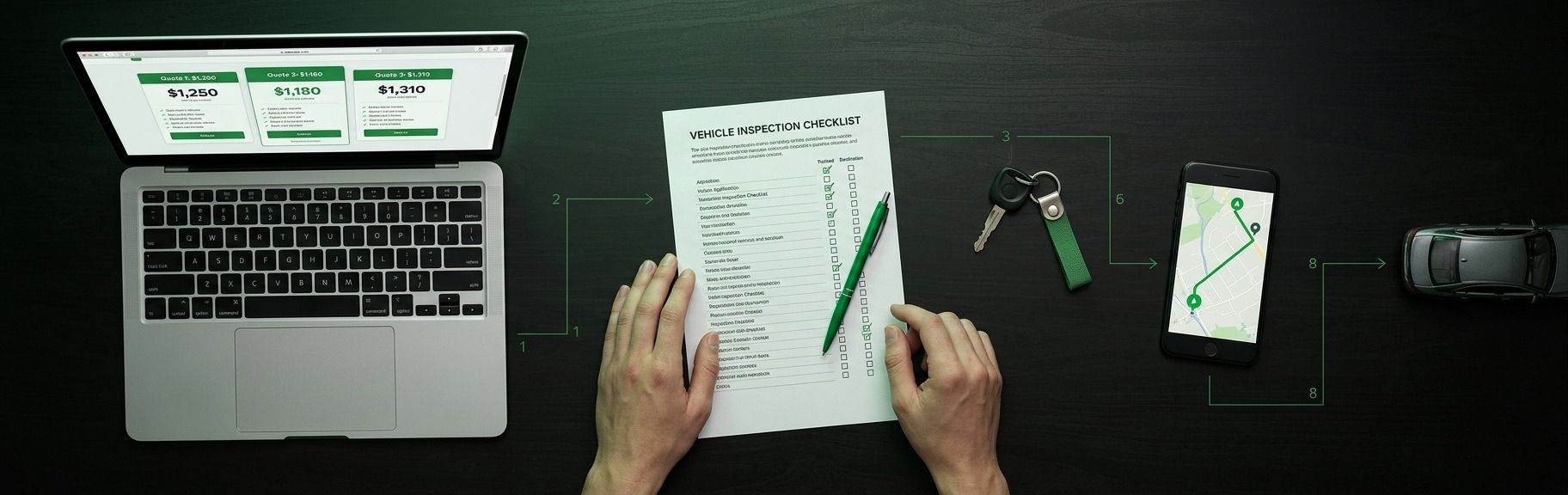
Here is how to ship a car from start to finish, in the order it actually happens. No jargon.
-
Get at least three quotes. Give each company your real route, vehicle year and model, and target dates. Vague inputs get you vague prices.
-
Compare on service, not just the lowest number. The cheapest quote is often a broker fishing for a carrier who may never accept the load.
-
Verify the company. Check its USDOT and MC number before you commit. The next section shows exactly how.
-
Book and read the contract. Confirm the price, the pickup window, and the insurance coverage in writing.
-
Prep the car. Wash it, photograph it, and empty it. Details in the prep section below.
-
Do the pickup inspection. You and the driver walk the car together and both sign the Bill of Lading.
-
Track transit. Stay reachable for the driver. Most delays are weather or a full truck, not a scam.
-
Inspect again and pay at delivery. Compare the car to your pickup photos before you sign off.
The single cheapest way to avoid overpaying is getting three quotes. Most first-timers book the first call and lose all their bargaining room. When you are ready to shipping a car over a long distance, this guide to shipping a car across the USA walks the long-haul version, and understanding door-to-door transport clears up the delivery logistics before you transport a car anywhere.
How to Vet a Company So You Do Not Get Burned

This is the section that earns the title. A bad car shipping service almost always shows warning signs before you pay, if you know where to look. The good news is that the federal government gives you a free tool to settle it in two minutes.
Watch for these red flags.
-
A quote far below every other bid. Lowball prices are bait to win the booking, then the price climbs.
-
No USDOT or MC number, or a company that dodges the question.
-
A demand for a large deposit upfront, especially by wire or gift card.
-
No written contract, only a verbal promise.
-
High-pressure "book today or lose the rate" tactics.
-
A phone rep who will not give a straight answer on insurance.
-
Reviews that all sound the same and all landed the same week.
To verify a car transport service for real, pull its number and run it through the FMCSA SAFER company snapshot. Confirm the company has active authority and insurance on record, then cross-check the business name against reviews on independent platforms. Here is the honest limit, and admitting it is the point. A clean federal record is the floor, not a guarantee of a smooth move. It tells you the company is legally allowed to operate, not that it will show up on time. Use it to eliminate the obvious frauds, then let reviews and quotes decide among the legitimate ones. These five questions to ask before hiring and this guide on choosing the best auto transport service give you the exact script.
Best Car Shipping Companies to Consider in 2026
There is no single best company for everyone, so the real goal is matching a car shipping service to your situation. The four below are reputable, well-reviewed options pulled from verified review data, not a paid ranking. No company can buy a higher spot on this list. Ratings shown are Trustpilot scores from the latest review audit and should be re-checked at the moment you book, since scores move over time.
|
Company |
Known For |
Best Fit |
Trustpilot Rating |
|
Exclusive Auto Shipping |
Strong communication, smooth first-time experience |
Nervous first-timers who want hand-holding |
4.9 |
|
Karma Auto Transport |
High would-use-again scores, responsive support |
Repeat shippers who value service |
5.0 |
|
Mile Auto Transport |
Clean, honest pricing with few surprises |
Budget-aware shippers who hate hidden fees |
4.7 |
|
Neptune Auto Transport |
Reliable mid-market option, solid coverage |
Standard moves on common routes |
4.5 |
Think of these as a starting shortlist for your car transport services search, not a verdict. The smart move is to pick two or three, run each through the SAFER check from the last section, and then let the quotes settle it. That approach works whether you want the top-rated experience or the leanest price, and it keeps the choice about your car and your route rather than whoever markets the loudest. Good car shipping services earn the booking with data, not pressure, and that is exactly how these auto transport services should be treated.
Prep, Pickup, and Delivery Day: The Inspection That Protects You
Shipping a car safely is half company choice and half what you do on the two days that bracket the trip. The inspection and the Bill of Lading are your only proof if something goes wrong, so this is not the step to rush.
Prep the car first.
-
Wash it so any existing scratches and dents are clearly visible.
-
Photograph every panel with timestamps, plus close-ups of any existing damage.
-
Leave about a quarter tank of fuel, enough to load and unload, not enough to add weight.
-
Remove all personal items, toll transponders, and parking passes.
-
Disable the alarm so it does not drain the battery in transit.
-
Fold in the mirrors and note any loose trim.
On pickup day, you and the driver inspect the car together and both sign the Bill of Lading. That document becomes the legal record of the car's condition when it left your hands, so read it before you sign. At delivery, repeat the inspection against your photos before you sign off and pay. If you spot new damage, note it on the paperwork before signing, then file the claim within the carrier's window. This is where documentation wins or loses a dispute.
ConsumerAffairs reports that vehicle delivery typically takes one to seven days, though only about 18% of shippers expected delivery within a week, so patience on timing is normal even when everything is going right. Covered options like covered vehicle transport add a layer of protection for the trip, and if the worst happens, this guide to a car damaged during shipping and these contract tips tell you what to do next when shipping a vehicle.
Special Situations: What Changes for Your Kind of Move
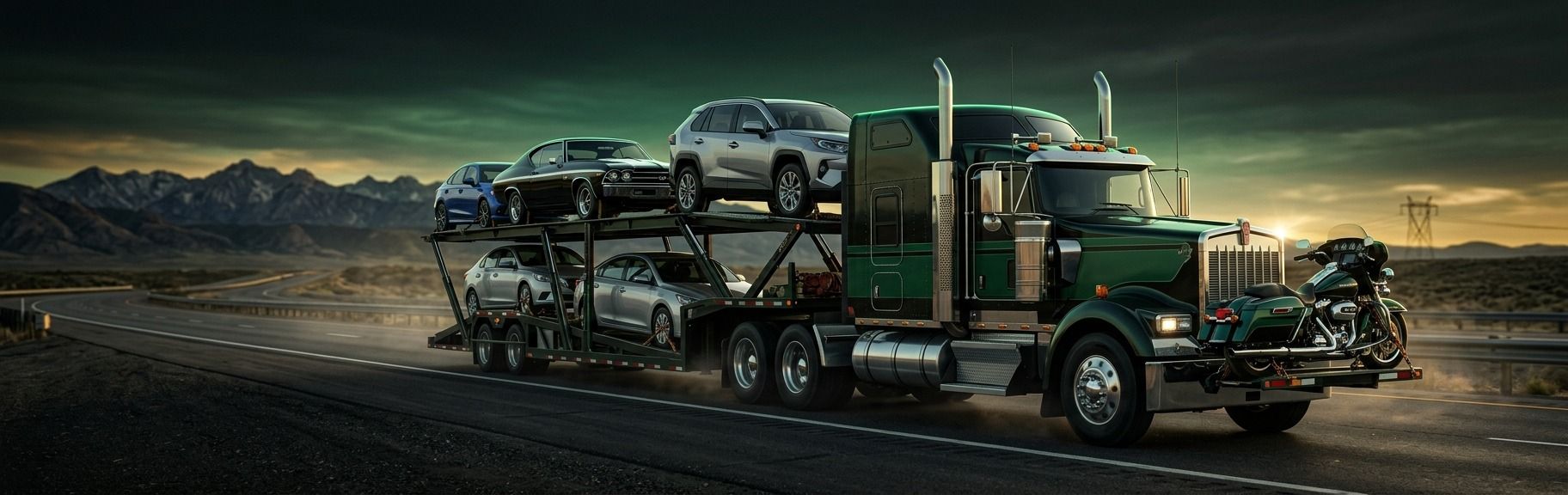
The core steps stay the same, but a few situations add a wrinkle worth knowing before you book car transport. Find your row.
|
Your Situation |
What Is Different |
What to Ask For |
|
Relocating for job or school |
Timing has to match your move date |
Flexible pickup window, tracking |
|
Snowbird heading south |
Peak-season demand spikes prices |
Book two to three weeks early |
|
Dealer moving inventory |
Multiple cars, tight margins |
Multi-car rates, terminal options |
|
Classic or exotic owner |
Value and low clearance |
Enclosed, top-load placement |
|
Car-show organizer |
Several vehicles, fixed dates |
Coordinated multi-vehicle scheduling |
|
Military PCS move |
Orders drive the timeline |
Dated-order discounts, priority booking |
|
Senior who wants it handled |
Prefers minimal logistics |
Door-to-door, full-service support |
|
Motorcycle owner |
Different loading and securing |
Crated or strapped specialty carrier |
The seasonal crunch is real for snowbirds. A survey covered by AZ Big Media found 63% of snowbirds head to Florida for the winter and 13% to Arizona, which is exactly why rates on those routes climb in late fall. If you are shipping into or out of California or another high-traffic state, the fix is the same, book early. Different personas also map to purpose-built services.
Snowbirds should look at seasonal car relocation, military families at military vehicle relocation, and riders at enclosed motorcycle shipping. Whatever your situation, the three moves never change, get several quotes, verify the company, and protect yourself at inspection.
For the seasonal crowd, this snowbird car shipping guide and the college student car shipping guide are built for exactly these moves.
What First-Time Shippers Ask Most
Before you book, these are the questions that come up again and again. Short, straight answers so you can move forward with confidence.
How much does it cost to ship a car across the country in 2026?
Cross-country car shipping in 2026 usually runs $1,300 to $1,700 on an open carrier, with enclosed transport about 47% higher. Distance, vehicle size, and season set your rate. See the full 2026 cost guide.
How long does car shipping take?
Most vehicles arrive within one to seven days. Short in-state moves take one to three days, and cross-country hauls run five to seven. Weather and truck availability affect your transit time.
Is car shipping insurance included, or do I need my own?
Licensed carriers must carry cargo insurance that covers your car in transit, so basic coverage is included. Always ask for the certificate and confirm the limits. Your own auto policy may cover any gaps.
Can I put personal belongings in the car during shipping?
Most carriers allow up to 100 pounds in the trunk, but those items are not insured and add weight. Keep valuables and electronics out. Fewer belongings mean fewer delivery-day headaches.
What's the cheapest time of year to ship a car?
Late winter through early spring, roughly February to April, is usually cheapest. Snowbird season and summer moves spike demand and prices. Booking two to three weeks ahead locks in better rates.
Making the Call
Car shipping stops being scary the moment you treat it as three moves. Get several real quotes, verify the company on the federal SAFER database, and document the car at both ends. Everything else is detail. Still torn between open and enclosed?
If your car is a normal daily driver, go open and pocket the savings. If it is rare, low, or worth protecting, pay for enclosed and sleep easy. Still unsure about broker versus carrier? Either can serve you well, as long as you confirm who carries the insurance and who answers at pickup.
People do not get burned on car shipping because the industry is a scam. They get burned because they skipped the checks in this guide, checks that take one afternoon. You now have the whole playbook. Line up your shortlist, run the verification, and move your car the right way.
When you are ready, compare vetted car shipping companies and get matched with the one that fits your route, your car, and your budget.