
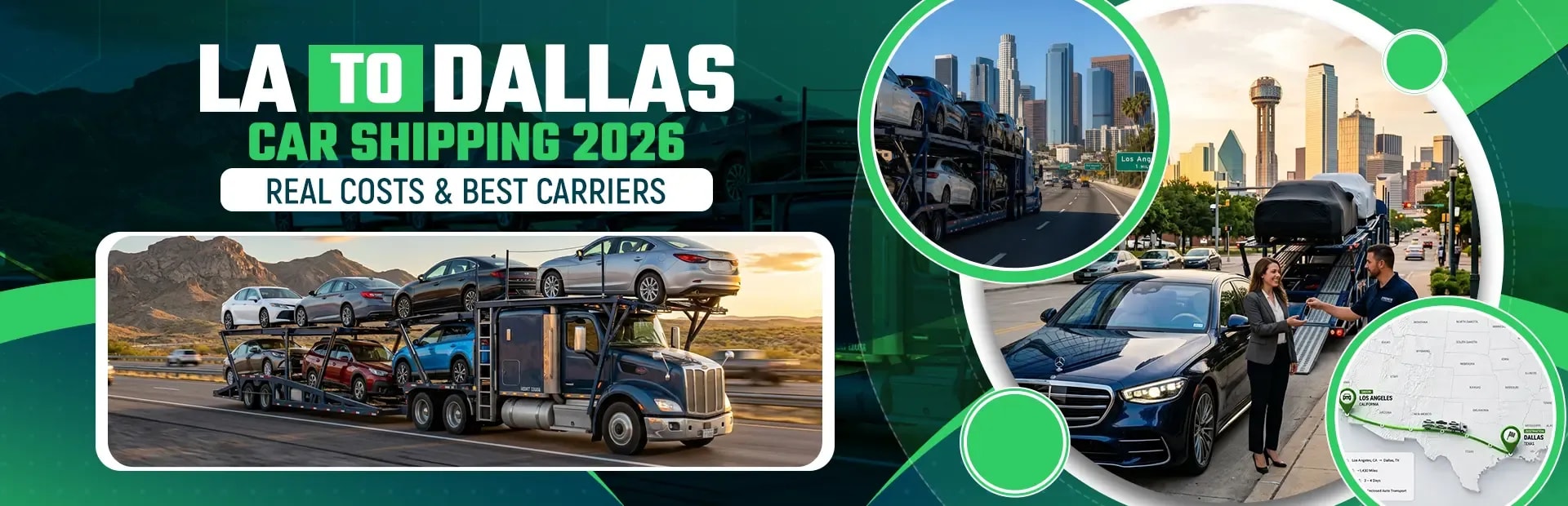
Close to 98,000 Californians moved to Texas in 2023 alone, and 1 in 5 of them left from Los Angeles.
That's a lot of cars that need to get from point A to point B. If you're one of the people looking to ship a car from Los Angeles to Dallas this year, whether for a job, a move, a car you bought online, or a seasonal relocation, you're looking at roughly 1,400 miles of highway between two of the country's top 5 car shipping destinations.
The good news?
This is one of the busiest auto transport corridors in the country, which means competitive pricing, plenty of carrier availability, and predictable timelines.
This guide breaks down what LA to Dallas car shipping actually costs in 2026, how long it takes, which transport type fits your situation, and which companies handle this route well. Get a free quote for your LA-to-Dallas shipment and compare verified carriers for your route.
What Does It Cost to Ship a Car from LA to Dallas in 2026?
This is the question everybody asks first. And the answer depends on a few things, but the ballpark is tighter than most people expect on this route.
Average Rates by Transport Type
Here's what the LA-to-Dallas corridor looks like in mid-2026, based on current carrier pricing data:
|
Transport Type |
Average Cost Range |
Cost Per Mile |
Best For |
|---|---|---|---|
|
Open carrier |
$950 – $1,300 |
~$0.66 – $0.90 |
Daily drivers, sedans, standard SUVs |
|
Enclosed carrier |
$1,400 – $1,900 |
~$0.97 – $1.32 |
Classics, exotics, luxury vehicles |
|
Expedited / priority |
$1,500 – $2,100 |
~$1.04 – $1.46 |
Time-sensitive moves, dealer inventory |
For context, Kelley Blue Book puts the national average at roughly $1.02 per mile for a 1,000-mile shipment. The LA-to-Dallas rate often comes in slightly below that per-mile average because the route is high-volume, and carriers can fill trailers more easily on this lane.
The most common price for an open carrier shipment on this route in 2026: $1,050 to $1,200 for a standard sedan or small SUV.
What Changes Your Final Price
Not every quote you get will land in that table. Here's what moves the number up or down:
-
Vehicle size and weight. A Honda Civic ships cheaper than a Ford F-250. Larger vehicles take up more trailer space and add fuel costs. If you're shipping something oversized, read how vehicle size and weight affect your rate.
-
Time of year. Summer (June through August) and early January are peak season for California auto transport. Prices can jump 15–30% during those windows.
-
How far ahead you book. Booking 2 to 3 weeks early on this route can save you $150 to $250 compared to last-minute requests. How much to ship a car from LA to Dallas also depends on how flexible you are with dates.
-
Vehicle condition. Non-running vehicles cost $100 to $300 more because they require a winch to load, and fewer carriers accept them.
-
Pickup and delivery access. Tight streets, gated communities, or rural areas outside the DFW metro can add $50 to $100 for a truck reroute.
One thing worth knowing: quotes vary by $200 to $400 between companies for the exact same car on the exact same route. That gap comes down to broker markup, carrier network size, and how aggressively a company prices to win your booking. The cheapest quote isn't always the best one, and the most expensive one isn't always the most reliable. More on that later.
How Long Does LA to Dallas Car Transport Take?
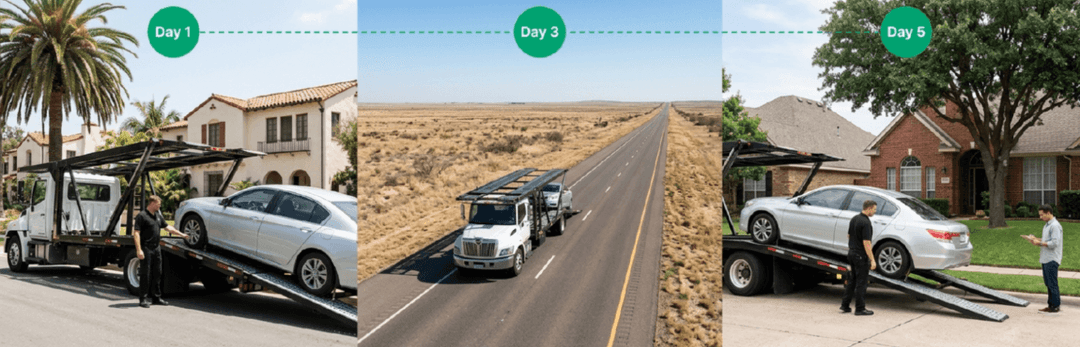
Most open carrier shipments on this route take 4 to 6 business days from pickup to delivery. Enclosed transport runs slightly longer, often 5 to 8 days, because enclosed trailers carry fewer vehicles and make fewer stops on the same corridor.
The LA-to-Dallas corridor runs roughly 1,400 miles, primarily along I-10 and I-20. It's one of the higher-volume lanes in the country, which is good for you. More carriers run this route regularly, which means faster matching and fewer delays.
Here's what can speed things up or slow them down:
-
Season. Holiday weeks and peak summer months create backlogs. Carriers are fully booked, and your pickup window may slide by a day or two.
-
Carrier availability. If you're shipping from a busy metro like LA, carriers pick up frequently. Shipping from a rural area outside the city adds time.
-
Pickup flexibility. Giving a 2 to 3 day window instead of demanding an exact date helps carriers route more efficiently. This alone can cut a day off your timeline.
-
Door-to-door vs terminal. Terminal shipping in Texas can add 1 to 2 days because you're waiting for the terminal's schedule, not the carrier's.
If you're relocating for a job or a PCS move and need your car there by a specific date, book at least 2 weeks early and ask for an expedited option. Expedited typically cuts 1 to 2 days off the standard window, but it costs more.
Open vs Enclosed Transport on the LA-Dallas Route
About 90% of all vehicles shipped in the U.S. travel on open carriers. The other 10% go enclosed. Both work on this route. The question is which one your vehicle actually needs.
When Open Carrier Is the Right Call
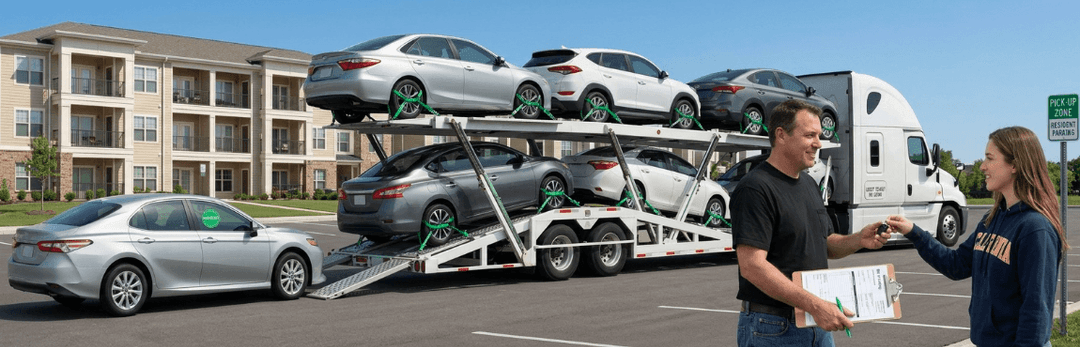
Open transport is the default for a reason. It's cheaper, faster (more carriers run open trailers), and perfectly safe for most vehicles. Your car rides on a multi-level trailer alongside 7 to 10 other vehicles, exposed to weather and road dust but strapped down and secured.
Who this fits:
-
Individual owners shipping a daily driver from LA to Dallas
-
Dealerships moving standard inventory across the CA-TX corridor
-
Students relocating for school at UT Dallas, SMU, or any DFW-area campus
-
Military families on PCS orders
-
Budget-conscious movers who need reliable, not premium
If you're shipping a 2020 Camry or a used SUV you bought on Carvana, open auto transport from Los Angeles to Dallas is all you need. Learn more about how open car shipping works.
When Enclosed Is Worth the Price Difference
Enclosed transport costs 25 to 35% more than open on popular routes like LA to Dallas. That premium buys you a fully covered trailer, climate protection, and fewer vehicles per load (typically 2 to 4 cars). The carrier handles your vehicle with more care because the entire trailer is designed for high-value freight.
Who this fits:
-
Classic car owners shipping a restored vehicle to a Dallas car show
-
Exotic and luxury owners with vehicles valued above $75K
-
Car show organizers moving inventory between events
-
Motorcycle owners shipping custom builds that need weather protection
Enclosed auto transport from LA to Dallas is the move when your vehicle's condition is directly tied to its value. A rock chip on a 2019 Accord is annoying. A rock chip on a 1967 Shelby GT500 is a financial hit. See how enclosed vehicle shipping protects high-value cars.
Door-to-Door Shipping vs Terminal Pickup on This Route
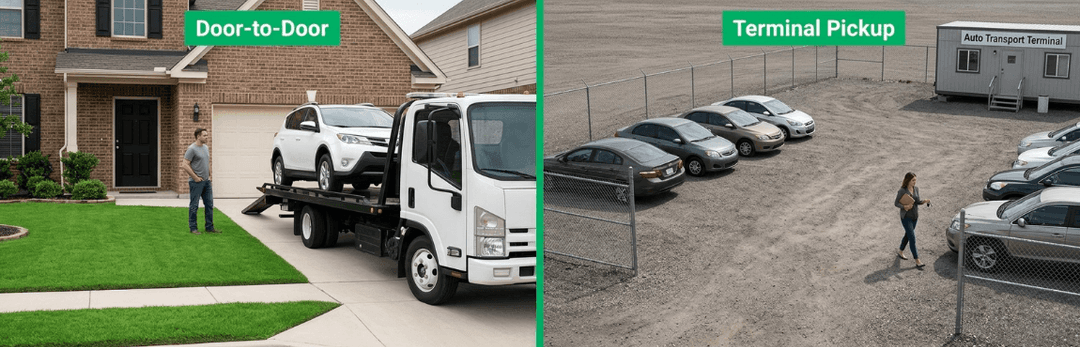
Most people assume they need to drop their car off somewhere. They don't. About 90% of auto transport shipments in 2026 use door-to-door delivery, where the carrier picks up from your address and delivers to your destination address.
Here's how the two options compare on the LA-to-Dallas corridor:
|
Feature |
Door-to-Door |
Terminal-to-Terminal |
|---|---|---|
|
Convenience |
Carrier comes to you |
You drive to the terminal |
|
Cost difference |
Standard pricing |
$50 – $100 cheaper |
|
Availability |
Wide, both LA and DFW metros |
Limited terminal locations |
|
Timeline |
Standard 4-6 days |
Can add 1-2 days for scheduling |
|
Best for |
Most shippers, anyone without a second car |
Flexible schedules, budget shippers |
Door-to-door car shipping from LA to Dallas is the standard for a reason. If you've just moved to a new city and don't have a second car to get to a terminal, or if you're a senior who prefers not to coordinate extra logistics, door-to-door removes that headache.
One note: "door-to-door" doesn't always mean the carrier parks in your driveway. If you live on a narrow street or a cul-de-sac, the driver may ask you to meet at the nearest safe location for a full-size trailer, usually a parking lot or wide intersection nearby. That's normal. It's still door-to-door service. Read more about how door-to-door transport works in practice.
3 Car Shipping Companies That Handle This Route Well
Not every auto transport company runs the California-to-Texas corridor with the same frequency or reliability. These three show up consistently in verified reviews for this lane. They're not ranked. Each one fits a different type of shipper.
Sherpa Auto Transport locks your price at booking. No adjustments, no surprises at pickup. Their price-lock guarantee is what separates them from most brokers on this route. If you want cost certainty on a long-distance LA to Dallas car transport quote, this is the company built for that. Read the full Sherpa review.
AmeriFreight offers military, student, and senior discounts, and they've been running the CA-to-TX corridor for years. Good fit if you're a service member on PCS orders, a college student moving to Dallas, or a retiree shipping your car ahead of a seasonal move. They handle both open and enclosed.
SGT Auto Transport is strong for both standard and high-value shipments. Dealerships use them for multi-vehicle loads. Individual owners use them for one-off enclosed shipments. They provide a single point of contact throughout the process, which matters when you're shipping something valuable from LA to Dallas and want real-time updates. Read the full SGT review.
Before you book with any company, verify their DOT and MC number through the FMCSA Company Snapshot tool. A legitimate carrier or broker will have an active operating authority, insurance on file, and a complaint history you can check yourself. If a company hesitates when you ask for their MC number, walk away.
Want to compare quotes from verified carriers for this route? Get your free LA-to-Dallas shipping quote in under a minute.
How to Get a Lower Quote Without Cutting Corners
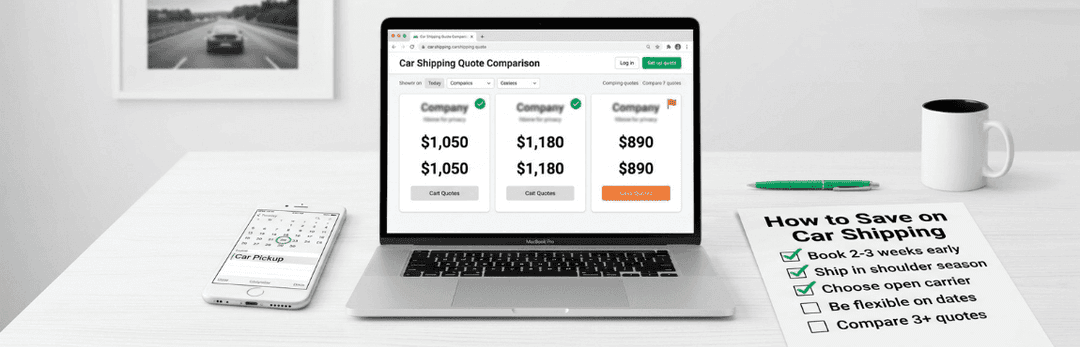
The cheapest car shipping quote from Los Angeles to Dallas is rarely the best one. Lowball quotes are the single biggest red flag in this industry. If one company comes in $300 below everyone else, they're either underquoting to win the booking (and the price goes up later) or they won't find a carrier willing to haul at that rate.
That said, there are real ways to bring your cost down without sacrificing reliability:
-
Book 2 to 3 weeks early. Last-minute bookings cost 15 to 30% more because you're competing with every other shipper for limited carrier spots. Planning ahead on the California to Dallas vehicle transport corridor gives carriers time to include your car on an existing run.
-
Ship in shoulder seasons. March through April and September through October are the sweet spots. Seasonal pricing swings can save you $100 to $200 on this route.
-
Choose open carrier if your vehicle doesn't need enclosed protection. That alone saves $400 to $600.
-
Be flexible on dates. Offering a 2 to 3 day pickup window instead of a fixed date helps carriers fit your vehicle into an existing route, which means a better rate for you.
-
Compare at least 3 quotes. But compare apples to apples. Ask each company what's included. Some quotes cover door-to-door and insurance. Others don't.
What to Check Before Your Car Leaves California
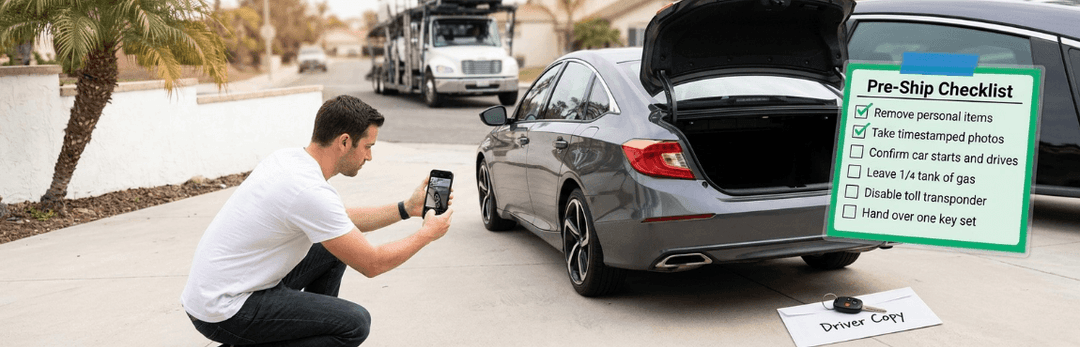
You've booked the shipment. A carrier is scheduled. Here's what to do before the truck shows up.
-
Remove personal items. Carrier insurance doesn't cover belongings inside the car. Most carriers allow up to 100 lbs, but if something gets stolen or damaged, that's on you. Keep valuables out.
-
Document existing damage. Walk around the car with your phone. Take timestamped photos of every panel, the roof, the wheels, and any existing scratches or dents. This is your proof if you need to file a damage claim later.
-
Make sure it runs. Non-running vehicles need a winch to load and cost $100 to $300 extra. If your car doesn't start, tell the company upfront. Some carriers won't take non-running vehicles at all.
-
Leave a quarter tank of gas. Enough for the driver to move the car on and off the trailer. A full tank adds weight and cost.
-
Disable toll transponders and parking passes. You don't want to get charged for every toll the carrier truck passes through on I-10 and I-20.
-
Hand over one set of keys. The driver needs to start and move the car. Keep your spare.
-
Check your insurance. Confirm whether your auto policy covers the vehicle during transit, or if you're relying entirely on the carrier's coverage. Know the FMCSA's minimum insurance requirements for licensed carriers, and ask for a copy of the carrier's insurance certificate before pickup.
At delivery, do the same walk-around. Compare the Bill of Lading to your photos from pickup. If anything is new, note it on the BOL before you sign. Once you sign without noting damage, filing a claim gets significantly harder.
So, Which Option Makes Sense for Your Situation?
The LA-to-Dallas route is well-traveled, well-priced, and well-served by carriers. The decisions are straightforward once you know what you're shipping and why.
If you're moving for work or school, open carrier with door-to-door delivery handles it for 90% of people at $950 to $1,300. If you're shipping a classic to a Dallas show or transporting a luxury vehicle, enclosed is the right call at $1,400 to $1,900. If you're a dealership moving inventory on this corridor, volume pricing and carrier consistency matter more than any single quote.
Book early, verify the company's FMCSA credentials, and document your vehicle's condition before pickup. The rest is logistics. And logistics, on a route this popular, tend to go smoothly. Ready to lock in your rate? Get a free LA-to-Dallas car shipping quote from verified carriers and compare prices before you book.