
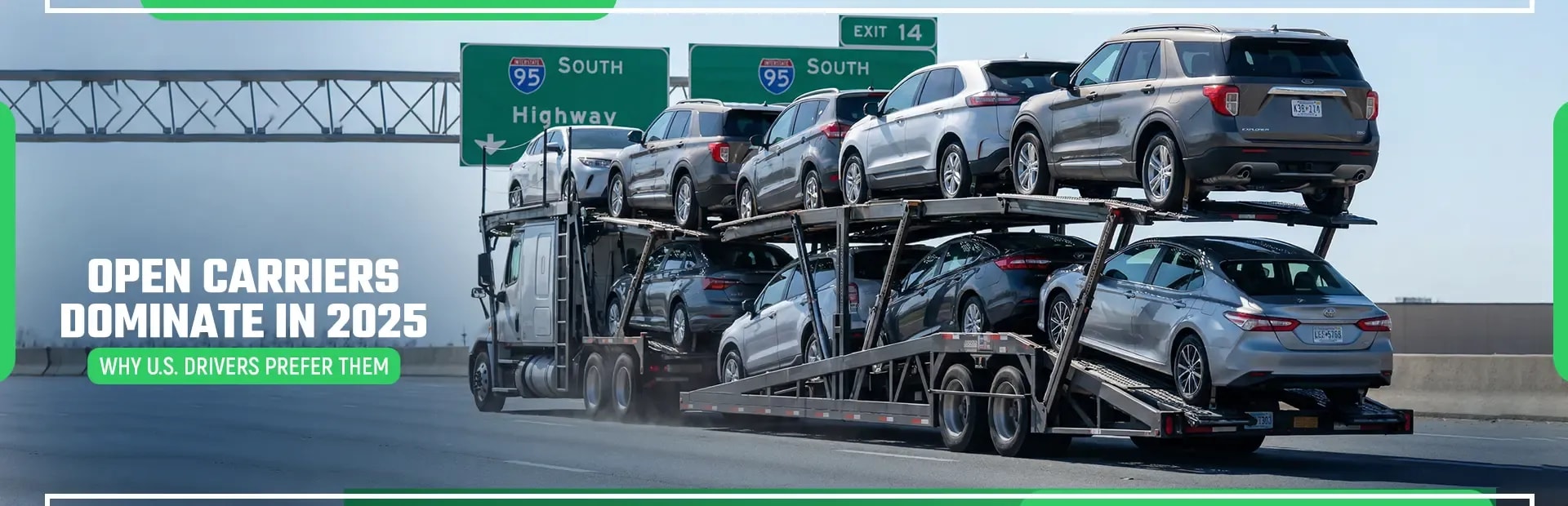
Most Americans choose open car transport because it is the most affordable way to ship a vehicle, has the most trucks available, and is safe for most standard cars, SUVs, and pickups. Enclosed transport offers more protection but costs more and has fewer trucks. With higher fuel prices in 2026, the lower cost of open transport matters even more to shippers.
Open car carriers are the trucks you see on highways carrying rows of vehicles on two levels. They remain the most common way to ship a car in the United States. But why do so many people choose them, and is open transport the right choice for your vehicle?
At Transportvibe, we track carriers, customer feedback, and pricing trends across the industry. This guide explains how open car carriers work, why they stay popular in 2026, and when enclosed transport is the better choice. If open transport fits your vehicle, you can get a vehicle shipping quote and compare current rates from verified open carriers on your route.
What Is Open Car Transport, and How Does It Work?
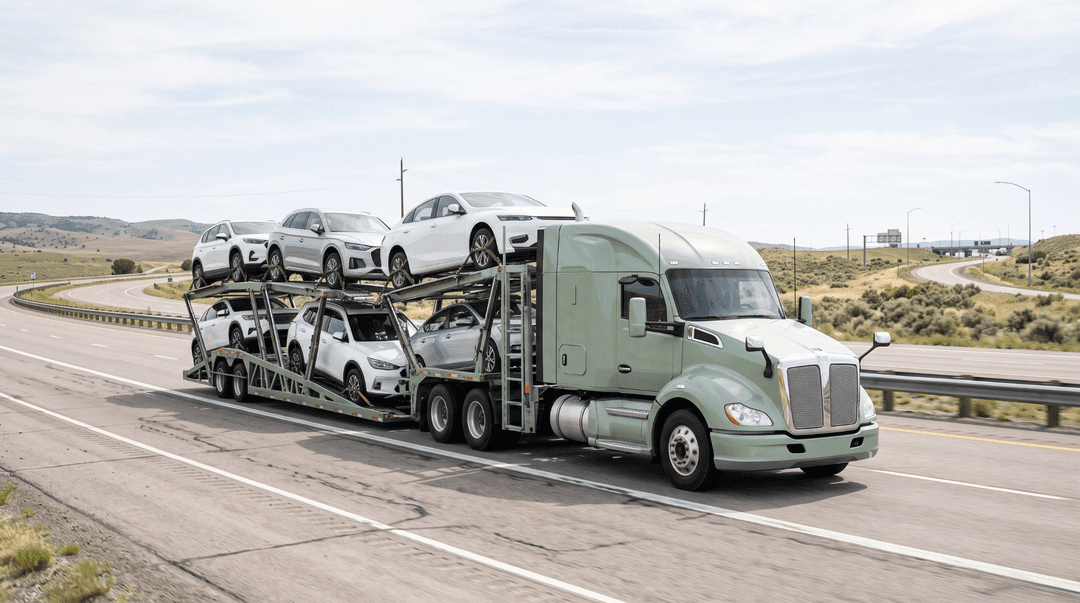
Open car transport means shipping your vehicle on a trailer with no walls or roof. The car is secured to the trailer and exposed to weather and road conditions during the trip. Most open carriers haul several vehicles at once on a two-level trailer.
Open carrier transport is the industry standard for everyday vehicles. Dealers, auctions, rental companies, and individual car owners all use open carriers to move vehicles across the country. Carrying more cars per trip spreads the driver’s fuel and labor costs across more customers, which keeps prices lower.
Enclosed car transport is the main alternative. It uses a fully covered trailer that protects the vehicle from weather, dust, and debris.
A typical open car shipment follows these steps:
-
You request a quote. The broker or carrier prices your route, vehicle, and dates.
-
A carrier is assigned. The company matches your car with a truck heading in your direction.
-
The driver inspects your car at pickup. The driver records any existing damage on the bill of lading, often with photos.
-
Your car is loaded and secured. Straps or chains hold each wheel in place during the trip.
-
Your car is delivered. You inspect the vehicle with the driver and sign the bill of lading.
Many open carriers now use digital tools to make shipping easier. These include electronic bills of lading, photo condition reports, and text or email tracking updates.
Why Do Most Americans Prefer Open Car Transport?
Lower prices, faster scheduling, and wide availability make open transport the top choice for most shippers. Here are the main reasons.
1. Lower Cost
Open transport is almost always cheaper than enclosed car transport. Open trailers carry more vehicles per trip, so each customer pays a smaller share of the cost. With higher fuel prices in 2026, these savings matter to more shippers.
2. Easier and Faster Scheduling
Far more open carriers operate on U.S. roads than enclosed carriers. This usually means more pickup dates to choose from and shorter wait times.
3. Safe for Most Vehicles
Open transport is safe for most standard cars, SUVs, and pickup trucks. These vehicles are built to handle weather and road conditions every day.
4. Wider Route Coverage
Open carriers serve more routes, including smaller cities and rural areas. Enclosed carriers often focus on major routes between large metro areas.
5. Better Fuel Efficiency
Open trailers are lighter than enclosed trailers. A lighter load uses less fuel per vehicle, which helps keep costs down.
Is Open Car Transport Right for Your Vehicle?
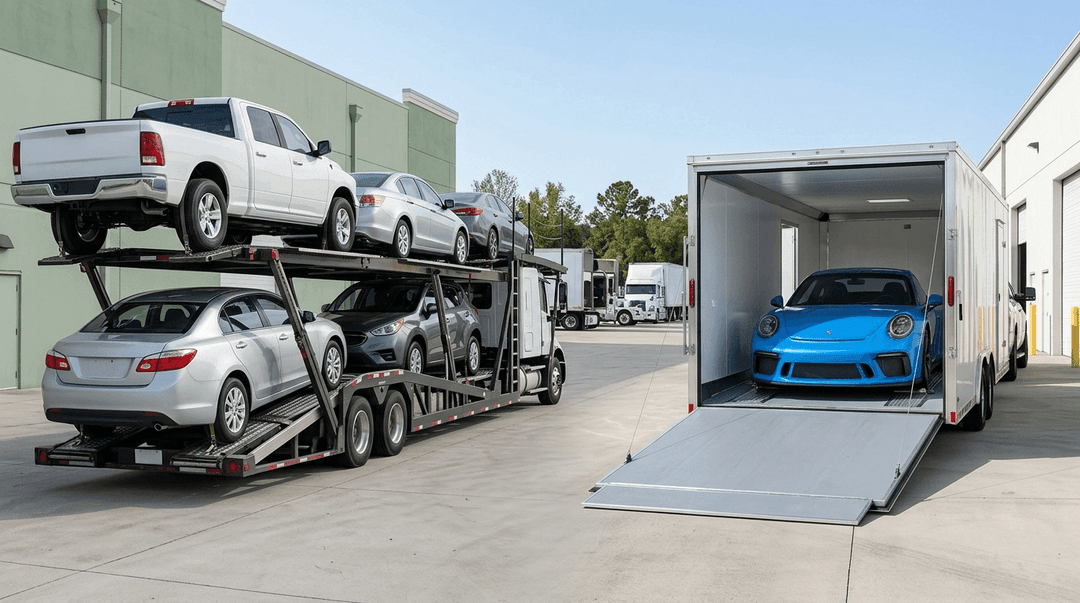
Open car transport is safe and cost-effective for most standard vehicles, while enclosed transport offers more protection at a higher price. Damage on open carriers is uncommon, and most minor issues come from road debris or weather. When weighing open vs enclosed car shipping, the right choice depends on your vehicle’s value, your budget, and your timeline.
|
Factor |
Open transport |
Enclosed transport |
|---|---|---|
|
Cost |
Lower |
Higher |
|
Truck availability |
High |
Limited |
|
Scheduling |
Usually faster |
Often longer wait |
|
Weather protection |
None |
Full |
|
Road debris protection |
Limited |
Full |
|
Best for |
Standard cars, SUVs, and pickups |
Luxury, classic, exotic, and low-clearance cars |
|
Route coverage |
Most routes, including rural areas |
Mainly major routes |
Prices for both options change with fuel costs, season, distance, and route popularity. Request current quotes for your route to compare the actual difference.
Most everyday vehicles are good candidates for open car transport. These include:
-
Sedans, such as the Toyota Camry and Honda Accord
-
SUVs and crossovers, such as the Ford Escape and Subaru Outback
-
Standard pickup trucks
-
Motorcycles, when secured with wheel chocks and straps
-
College students’ cars for seasonal moves
-
Dealer and auction vehicles
Larger trucks and heavy SUVs can usually ship on open carriers, but they may cost more because they take up more space and weight on the trailer.
To protect your car, choose a carrier that meets these standards:
-
Active FMCSA authority. The company is registered to operate as a carrier or broker.
-
Proof of insurance. The carrier can provide a certificate of insurance that includes cargo coverage.
-
Clear inspection process. The driver records your car’s condition at pickup and delivery.
Federal rules require carriers to carry liability insurance, but cargo coverage limits are set by each carrier. Always ask for the certificate of insurance and confirm the coverage amount before booking. You can check a company’s authority and insurance filing on the FMCSA SAFER company snapshot.
How Do You Choose the Right Option and Prepare Your Car?
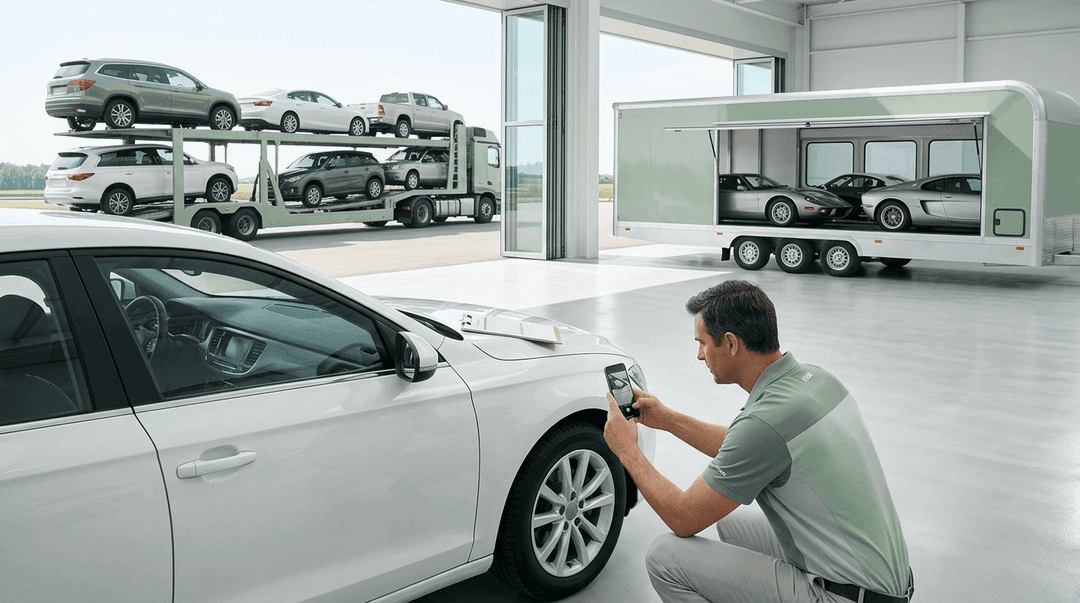
Choose enclosed transport when your vehicle needs full protection, and open transport for most everyday vehicles. Whichever option you choose, a few simple steps before pickup help protect your car and prevent delays.
Consider enclosed transport if:
-
You own a luxury, exotic, or high-value vehicle
-
Your car is a classic or collector vehicle
-
Your car has low ground clearance or delicate bodywork
-
Your car has custom paint or a fresh restoration
-
You are shipping during harsh winter weather or wildfire season
-
You need zero exposure to the elements for insurance or resale reasons
Transportvibe Tip: Compare quotes for both open and enclosed transport. Then weigh the price difference against your vehicle’s value and condition.
Once you have booked, prepare your car with these steps:
-
Wash your car. A clean car makes it easier to spot existing damage during inspection.
-
Take dated photos. Photograph every panel, the roof, and the wheels.
-
Remove personal items. Most carriers limit or prohibit items inside the car, and those items are not insured.
-
Leave about a quarter tank of fuel. This keeps the car lighter while allowing it to be driven on and off the trailer.
-
Remove loose accessories. Take off bike racks, removable spoilers, and custom antennas.
-
Disable the alarm. Give the driver instructions if the alarm cannot be turned off.
-
Check for leaks. Fix any active fluid leaks, since carriers may refuse a leaking vehicle.
Find the Right Open Carrier for Your Move
Open car transport remains the most popular way to ship a vehicle in 2026 for good reason. It is affordable, easy to book, and safe for most standard cars, SUVs, and pickup trucks. With fuel prices higher this year, the lower cost of open transport is even more valuable to everyday shippers.
Enclosed transport is still the better choice for luxury, classic, and low-clearance vehicles that need full protection. Whether you are relocating for work, sending a car to a college student, or buying a vehicle from out of state, compare both options and verify the carrier’s FMCSA record before booking. At Transportvibe, we recommend reviewing both choices, but for most everyday drivers, open shipping offers the best value. Get a Free Open Carrier Shipping Quote and see how much you could save on your next move.