
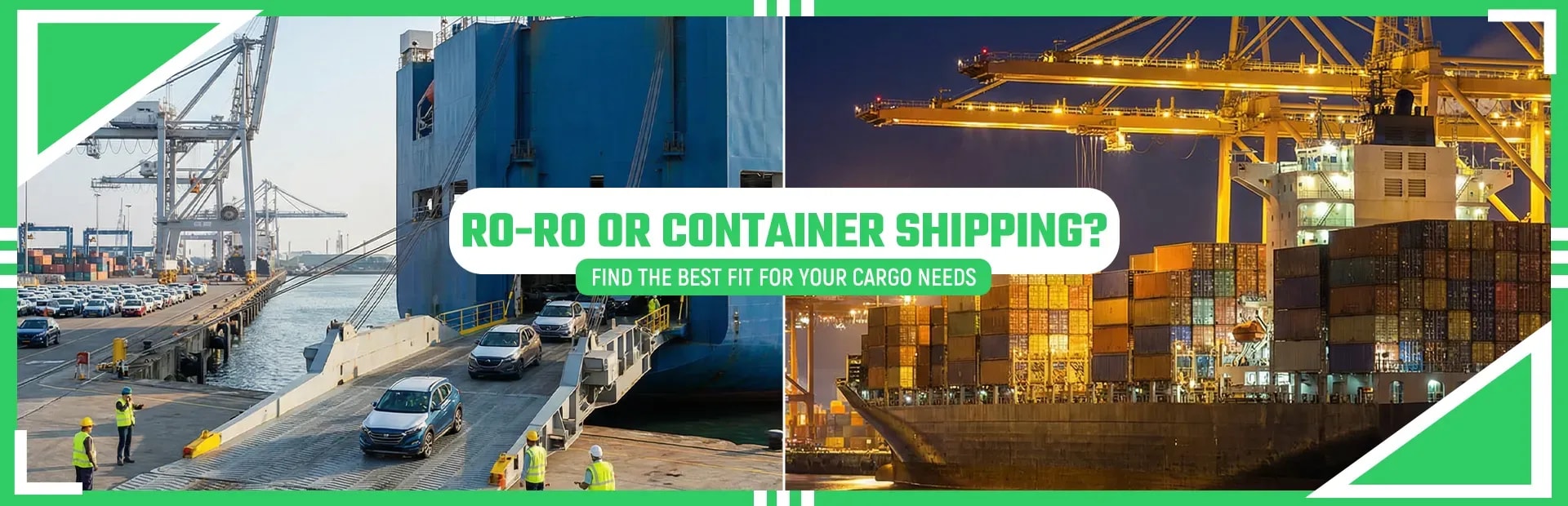
Shipping a car overseas means picking between two main methods: Ro-Ro and container shipping. The right choice depends on your vehicle, your budget, and where it's headed.
Ro-Ro, roll-on roll-off, is a fast, affordable option for a car that can drive. Container shipping locks your vehicle inside a sealed container for extra protection and more flexibility. Each has real trade-offs.
This guide breaks down the cost, the process, and which option fits your situation, with real examples.
At Transportvibe, we want picking a shipping company to be simple and honest. We offer real, unbiased reviews so you can find a provider you can actually trust.
What is Ro-Ro shipping?
Ro-Ro ships load cars, trucks, and heavy machinery by driving them straight on and off the vessel. It's built for speed.
These ships have multiple decks with ramps, so vehicles roll on and off fast. That makes Ro-Ro popular for high-volume shipments, and it matters even more if you're shipping an electric vehicle, check our guide to shipping EVs for that case specifically.
How Ro-Ro works
-
The process: Ro-Ro ships have open decks and ramps, so vehicles roll on and off without a crane. Less handling means less time at port.
-
What it carries: sedans, SUVs, trucks, buses, and construction equipment, anything that can drive on its own. A car that can't run usually can't go this route.
-
Securing your car: vehicles are driven on, then tied down with lashings or wheel chocks to stop them moving in transit.
-
The ship itself: decks adjust to fit everything from a motorcycle to oversized machinery, with watertight compartments for safety.
-
Speed: loading takes hours, not days, faster than container shipping and a good fit for a time-sensitive shipment on a major route.
-
Cost: less handling means a lower price, usually $700 to $3,500 depending on distance and vehicle size.
-
The trade-off: your car sits exposed to weather on an open deck, which risks minor scratches or corrosion. Ro-Ro also only runs on certain routes.
Ro-Ro works well for a functional vehicle on a major trade route. It's less secure than container shipping for something high-value.
What is container shipping?
Container shipping loads your vehicle into a standard metal container, which then goes onto a cargo ship. It's built for security and flexibility, using enclosed containers rather than open decks.
Containers, usually 20ft or 40ft, get loaded by crane at port. This method works for vehicles, personal items, or a mix of both.
How container shipping works
-
The process: your vehicle gets driven or loaded into a container, sealed, and hoisted onto the ship by crane.
-
Container types: a 20ft container fits one car, a 40ft fits two, and a high-cube fits a taller vehicle. You can book a Full Container Load (your own container) or share space with Less than Container Load.
-
Securing your car: it's driven or forklifted in, then strapped down. You can pack other items alongside it.
-
Protection: the sealed container shields your car from weather, theft, and damage, and reduces the chance of tampering.
-
What it can carry: a non-running vehicle, a luxury car, or oversized cargo that Ro-Ro can't take. You can also ship personal belongings alongside the car.
-
Reach: container ships call at more ports than Ro-Ro ships, including more remote destinations.
-
The trade-off: loading and unloading takes longer, and cost runs $900 to $5,000 depending on container type and distance.
Container shipping is built for security and flexibility, especially for a luxury or non-running car. It costs more, but for the right vehicle, that's worth it.
See top-rated auto shippers and read real customer reviews before you book.
Ro-Ro vs. container shipping: the key differences
Each method fits a different need.
-
Loading: Ro-Ro rolls a car on and off in hours. Container shipping uses cranes and takes days.
-
What it carries: Ro-Ro needs a drivable vehicle. Containers can carry a non-running car, a luxury car, or personal items.
-
Protection: Ro-Ro exposes your car to weather on an open deck. A container fully encloses it.
-
Cost: Ro-Ro runs $700 to $3,500. Containers run $900 to $5,000, more for a full container to yourself.
-
Ports: Ro-Ro runs on a limited set of routes. Containers reach more ports worldwide.
-
Speed: Ro-Ro is faster on major routes. Containers can take longer due to handling.
|
Factor |
Ro-Ro |
Container |
|---|---|---|
|
Loading |
Drive on and off via ramps |
Loaded by crane |
|
Best for |
Drivable vehicles |
Non-running vehicles, mixed cargo |
|
Protection |
Exposed to weather |
Fully enclosed |
|
Cost |
700-3,500 |
900-5,000 |
|
Port access |
Limited routes |
Wider global reach |
|
Speed |
Faster on major routes |
Slower due to handling |
Pros and cons of Ro-Ro shipping
Advantages
-
Cheaper: usually $700 to $3,500, less than container shipping since there's less handling involved.
-
Fast: vehicles drive on and off in hours, which cuts port time and speeds up delivery.
-
Handles volume well: a Ro-Ro ship can carry hundreds of vehicles at once, good for a manufacturer or dealer shipping a whole fleet.
-
Fits large vehicles: trucks, buses, and construction equipment fit on adjustable decks, even when they're too big for a standard container.
-
Simple to coordinate: less planning than container shipping, especially on a route with frequent Ro-Ro service.
Disadvantages
-
Less protected: an open or partly covered deck exposes your car to weather, risking scratches or saltwater corrosion. A sensitive or luxury car may need extra care here.
-
Vehicle type is limited: only drivable, wheeled vehicles qualify. You generally can't add personal belongings.
-
Fewer ports: Ro-Ro runs on specific routes, so it may not reach a less common destination.
-
Some handling risk: even with secure tie-downs, a vehicle can pick up a minor bump during loading.
-
Biosecurity rules: open decks mean stricter cleaning requirements to meet pest and contamination rules, which can add time and cost.
Ro-Ro is strong for affordable, high-volume shipping of a drivable vehicle on a major route. For some situations, the exposure risk and cargo limits make container shipping the better call.
Pros and cons of container shipping
Advantages
-
Better protection: an enclosed container shields your car from weather, theft, and handling damage, ideal for a luxury or classic car.
-
More flexible: containers handle a non-running vehicle, oversized cargo, or personal items packed alongside your car. You can book a full container (FCL) or share space (LCL).
-
More ports: container ships reach a much wider network than Ro-Ro, useful for a remote or less common destination.
-
More secure: containers are sealed at the start of the trip, cutting the risk of tampering.
-
More sizes: 20ft, 40ft, or high-cube containers let you fit a single vehicle or a mixed shipment.
Disadvantages
-
Costs more: $900 to $5,000, more than Ro-Ro because of crane handling and container fees. A full container to yourself costs noticeably more.
-
Slower: loading a vehicle into a container and craning it onto the ship takes longer than rolling it on, which can add days to your transit time.
-
Size limits: a standard container won't fit an oversized truck, you'd need a pricier high-cube container.
-
More coordination: packing, sealing, and transferring between ship and truck takes more planning than Ro-Ro.
-
Internal damage risk: if your car isn't secured properly inside the container, it can shift and get damaged in transit. Professional loading matters here.
Container shipping is the better call for a secure, flexible move, especially for a high-value or non-running vehicle. It costs more and takes longer, which may not work for every budget.
Cost comparison: Ro-Ro vs. container shipping
Ro-Ro usually costs $700 to $3,500. Container shipping usually costs $900 to $5,000, more expensive but with more protection.
What drives the price
-
Ro-Ro pricing: driven by low handling fees and fast loading. For example, shipping a sedan from the US to Europe by Ro-Ro can run $1,200 to $2,000.
-
Container pricing: a full container (FCL) costs more than a shared one (LCL). A 20ft container for one car to Europe can run $2,500 to $4,000.
-
Distance and route: both get pricier over distance, but Ro-Ro's fixed routes keep its pricing more predictable. Container costs rise more for a remote destination.
-
Vehicle size: a bigger vehicle raises Ro-Ro's cost through deck space. Containers have fixed sizes, so an oversized vehicle needs a pricier high-cube container.
-
Shared vs. exclusive space: Ro-Ro always shares vessel space, keeping costs down. A container can be all yours (FCL, pricier) or shared (LCL, cheaper but a bit riskier).
-
Extra fees: Ro-Ro may add a biosecurity cleaning fee. Containers add crane and terminal handling fees. Both can involve customs or insurance costs.
-
Real example: a sedan shipped from New York to Rotterdam by Ro-Ro runs about $1,500 including port fees. The same car in a 20ft container runs about $3,000 including handling and sealing.
Ro-Ro is the budget-friendly choice for a drivable vehicle. Container shipping costs more but makes sense for higher-value cargo.
Compare Ro-Ro and container providers on Transportvibe to find the best rate for your shipment.
Safety and security
Ro-Ro leaves your car exposed to the weather on an open deck, which risks minor scratches or corrosion. Tie-downs keep it in place, but handling can still cause small bumps.
Container shipping encloses your car fully, protecting it from weather, theft, and vandalism. The sealed container keeps it safe for the whole trip.
Either way, get cargo insurance to cover potential damage or loss, and confirm exactly what your policy covers before you book.
Key factors
-
Ro-Ro exposure: open decks mean weather and saltwater risk. Regular inspection helps, but protection is still limited compared to a container.
-
Container security: enclosed containers cut theft and weather risk, as long as your car is properly secured inside.
-
Handling risk: Ro-Ro's roll-on process can cause minor bumps. A container needs careful loading to avoid damage too.
-
Insurance: get coverage either way, and confirm it covers the specific risks you're worried about, corrosion, theft, or handling damage.
Ro-Ro costs less but protects less. Container shipping costs more but protects more. Pick based on your car's value and how much risk you're willing to take.
Which method fits your cargo?
Choose Ro-Ro when
-
Budget matters most: $700 to $3,500 fits a cost-conscious shipper moving a standard vehicle.
-
Your vehicle can drive: Ro-Ro needs an operational car, SUV, or piece of machinery.
-
You're on a major route: routes like US-Europe or Asia-Australia run Ro-Ro service often, with shorter transit times.
-
You're shipping in volume: a manufacturer or dealer moving a fleet saves per-vehicle with Ro-Ro.
Choose container shipping when
-
Your car is high-value: a luxury or classic car gets real protection from weather and handling damage.
-
Your car can't drive: containers load with a forklift or crane, which works for a project car or a damaged vehicle.
-
You're shipping more than a car: a full container lets you add personal items alongside your vehicle.
-
You're shipping somewhere remote: container ships reach more ports than Ro-Ro.
The decision in short
-
Budget: Ro-Ro is cheaper, containers protect more. Weigh that against your car's value.
-
Vehicle condition: a drivable, standard car fits Ro-Ro. A non-running or oversized vehicle fits a container.
-
Destination: check whether your route has Ro-Ro service, it's more limited than container shipping.
-
Timeline: Ro-Ro is faster on major routes. Containers can take longer.
Still not sure? Visit Transportvibe to compare providers and reviews for your specific route.
Environmental and logistical notes
Ro-Ro ships are built to use less fuel per vehicle, which helps on high-volume, major routes, but only where the route actually runs.
Container shipping fits well into mixed transport chains (ship to truck, for instance), though the crane handling and transfers use more energy and add complexity.
Port access and biosecurity rules affect both. Ro-Ro's limited routes can narrow your options, while containers reach more places but need more precise paperwork.
-
Environmental impact: Ro-Ro usually runs lower emissions thanks to efficient ship design. Container shipping uses more energy from extra handling.
-
Port access: Ro-Ro runs specific routes. Container ships reach more ports.
-
Biosecurity: Ro-Ro's open decks need thorough cleaning to meet the rules. Sealed containers simplify this, but need precise documentation.
Ro-Ro tends to be simpler and lower-impact on a major route. Containers give you more reach, with more logistics to manage.
Browse reviews of Ro-Ro and container providers on Transportvibe.
Making the call for your cargo
It comes down to your specific vehicle and situation. Shipping a standard, drivable car on a major route, and affordability and speed matter most? Ro-Ro is likely your best bet.
Shipping something high-value, non-running, or oversized, or adding personal items to the shipment? Container shipping's extra protection and flexibility make it the better choice.
Compare honest reviews and find the right provider for your cargo on Transportvibe.